
Box sets » Devolution

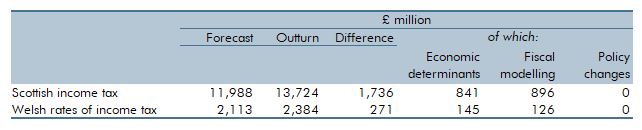
Scottish income tax and Welsh rates of income tax receipts in 2023-24 were higher than forecast. In this box, we assessed the reasons for these forecast differences.
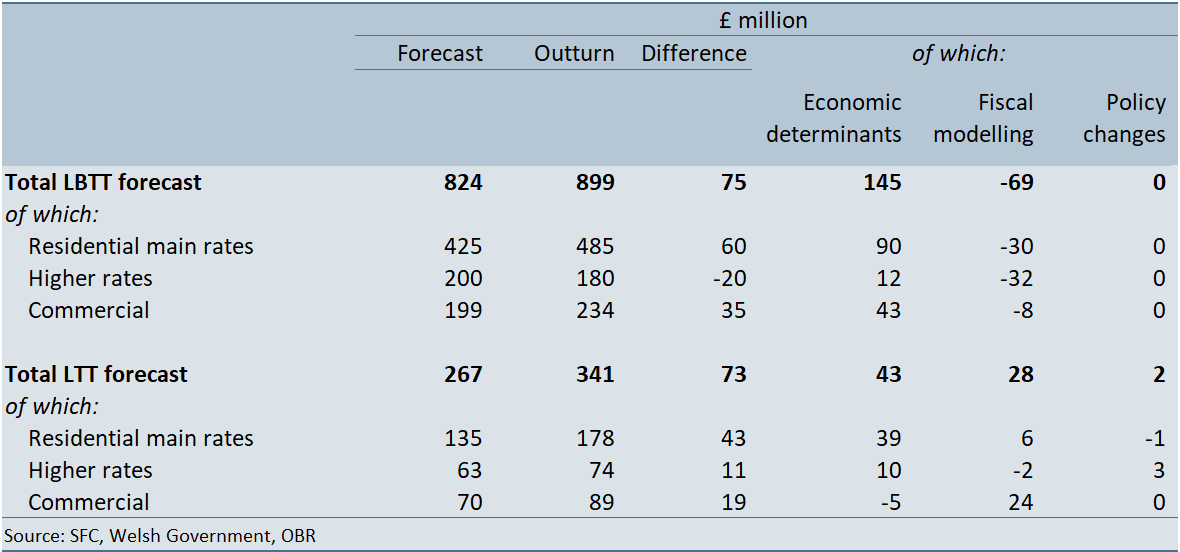
Scottish and Welsh property transaction tax receipts in 2024-25 were higher than forecast. In this box, we explored the reasons for these forecast differences, including how a faster-than-expected recovery in the residential property market contributed.
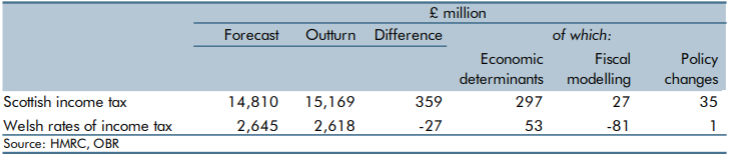
Income tax was devolved to the Scottish Parliament in 2016 and the Welsh Senedd in 2019. In this box we evaluated our March 2022 forecasts for 2022-23, and how they compared to the eventual outturn data. We explained the drivers behind the differences between our inital forcasts and final outturn behind the 2.4 per cent surplus for Scotland and 1.0 per cent shortfall in Wales. This was a particularly difficult period to forecast given the economy was recovering from the unprecedented impact of the Covid-19 pandemic.
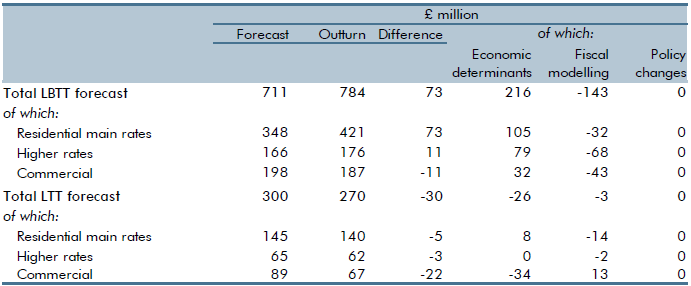
The land and buildings transaction tax (LBTT) was implemented in Scotland on April 1 2015 while the land transactions tax (LTT) began in April 1 2018. Both taxes replaced the UK Government’s stamp duty land tax but operate in similar ways. In this box we evaluated our March 2023 forecasts for 2023-24, and how they compared to the eventual outturn data. We explained the reasons behind the 10.3 per cent surplus for LBTT and the 9.9 per cent shortfall for LTT.
In this box, we explained how block grant adjustments are calculated for Scotland and Wales. We also explore the rationale behind these tax devolution arrangements and how this impacts the Scottish and Welsh budgets.
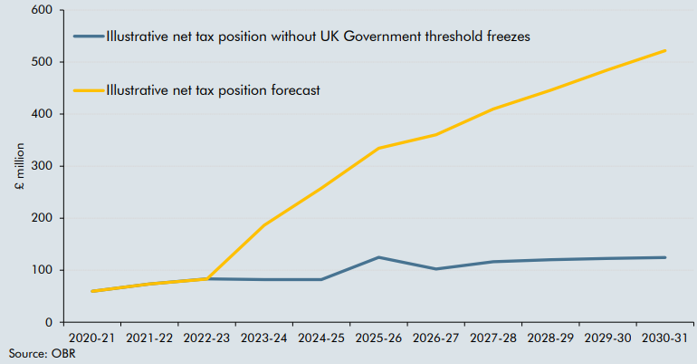
The UK Budget saw the extension of the personal tax threshold freezes. This box looked at the projected impact of the threshold freezes on the net tax position in Scotland and Wales.
In this box, we explained how block grant adjustments are calculated for Scotland and Wales. We also explore the rationale behind these tax devolution arrangements and how this impacts the Scottish and Welsh budgets.
The UK Budget saw the extension of the personal tax threshold freezes. This box looked at the projected impact of the threshold freezes on the net tax position in Scotland and Wales.

Welsh rates of income tax receipts in 2023-24 were higher than forecast. In this box, we assessed the reasons for this forecast difference.
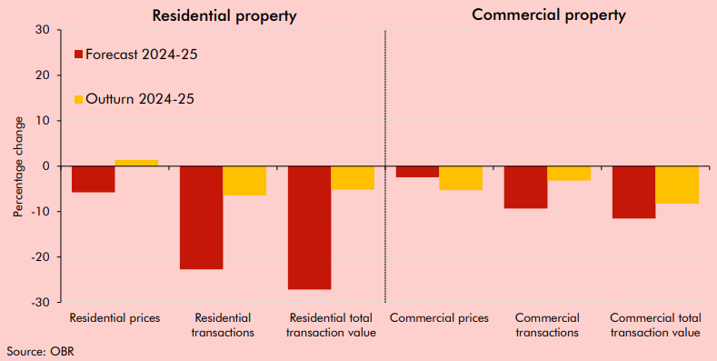
Land transaction tax receipts in 2024-25 were higher than forecast. In this box, we explored the factors behind this forecast difference, which was largely driven by stronger than expected residential transactions and prices.
Landfill disposals tax receipts in 2024-25 were higher than forecast. In this box, we explored the factors behind this forecast difference.
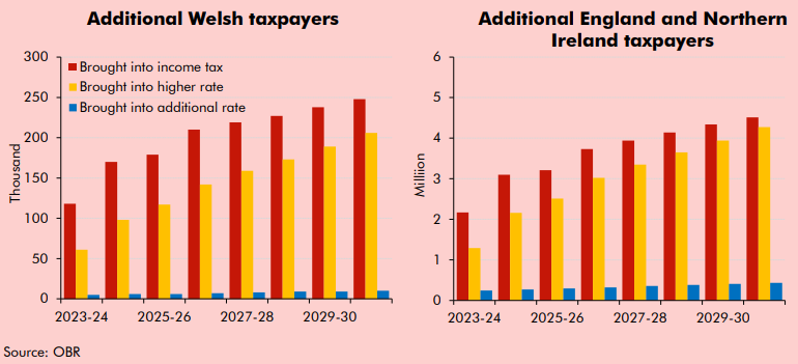
The UK Government's freezes to personal tax thresholds are expected to have a positive effect on the Welsh Government's budget. This box explored the reasons why.
Scottish income tax and Welsh rates of income tax receipts in 2023-24 were higher than forecast. In this box, we assessed the reasons for these forecast differences.
Scottish and Welsh property transaction tax receipts in 2024-25 were higher than forecast. In this box, we explored the reasons for these forecast differences, including how a faster-than-expected recovery in the residential property market contributed.
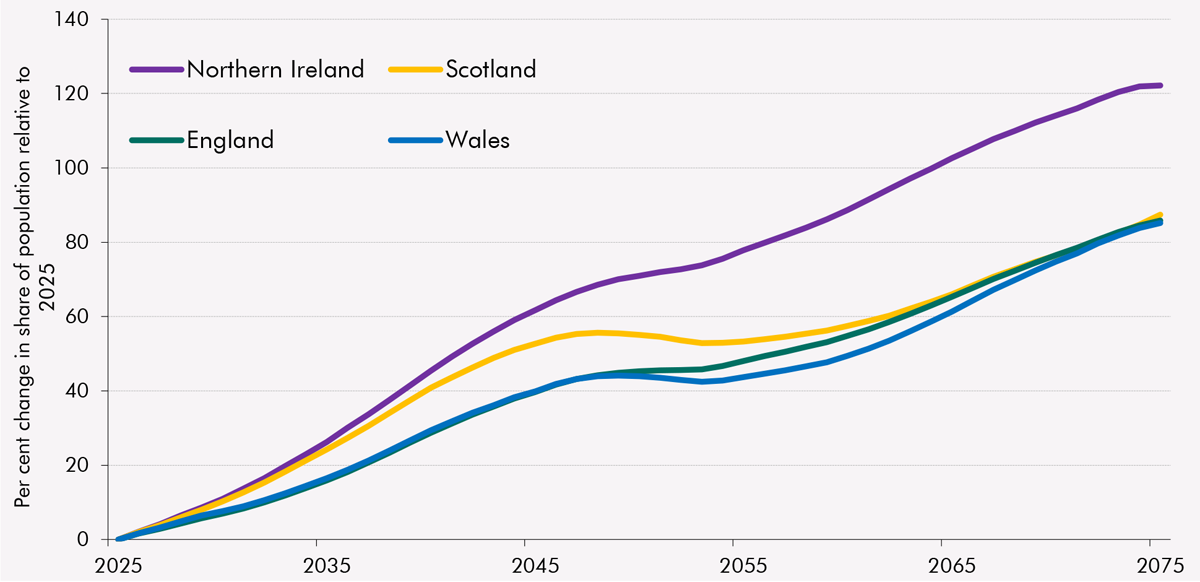
Our long-term projections focus on UK-wide pressures, however many public services are devolved to Scotland, Wales and Northern Ireland. In this box, we explored how demographic trends could affect devolved spending and revenues, highlighting some of the differing implications for Scotland, Wales and Northern Ireland.
Income tax was devolved to the Scottish Parliament in 2016 and the Welsh Senedd in 2019. In this box we evaluated our March 2021 forecasts for 2021-22, and how they compared to the eventual outturn data. This was a particularly difficult period to forecast given the economy was recovering from the unprecedented impact of the Covid-19 pandemic. The double-digit difference between our initial forecast and the final outturn, for both Scotland and Wales, is largely explained by the faster-than-expected post-pandemic recovery.
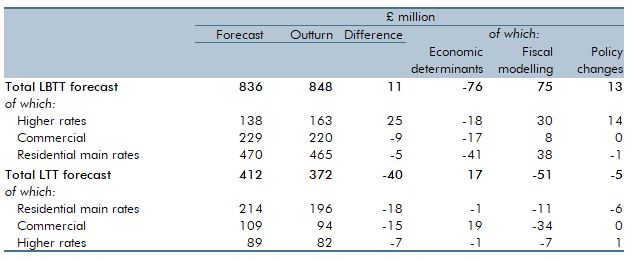
The land and buildings transaction tax (LBTT) was implemented in Scotland on April 1 2015 while the land transactions tax (LTT) began in April 1 2018. Both taxes replaced the UK Government’s stamp duty land tax but operate in similar ways. In this box we evaluated our March 2022 forecasts for 2022-23, and how they compared to the eventual outturn data. We explained the reasons behind the 1.4 per cent surplus for LBTT and the 9.6 per cent shortfall for LTT.
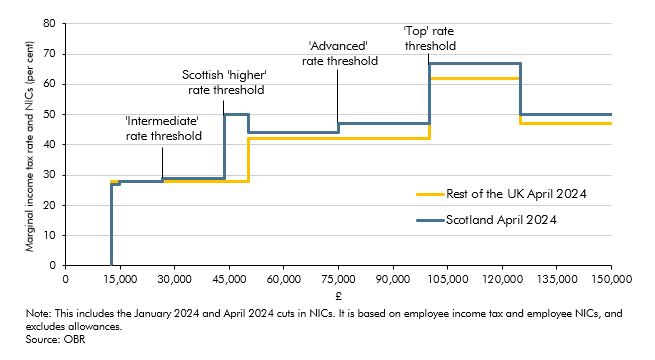
Income tax was devolved to the Scottish Government in 2016 and policy changes since then have led to a divergence with the UK Government’s income tax system. In this box we explored the costing of the Scottish Government’s December 2023 decision to introduce a new 45 per cent ‘advanced’ rate and to raise the ‘top’ rate to 48 per cent, including the potential behavioural responses.
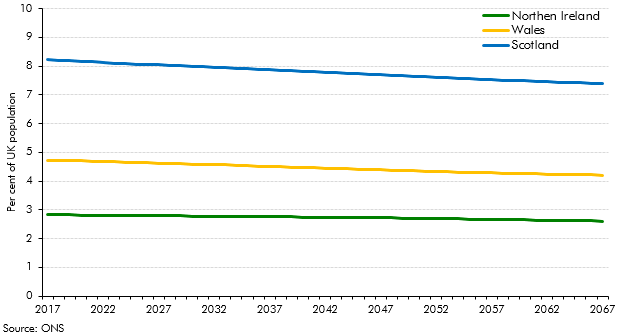
This box looked at differences in the Office for National Statistics’ population projections for the four constituent nations of the UK. It discussed the nations’ relative size and ageing, and possible implications for fiscal sustainability.
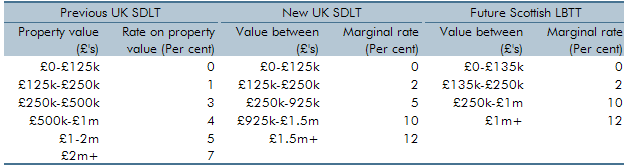
The Government announced substantial reforms to the residential stamp duty land tax (SDLT) system at Autumn Statement 2014. This box explored how the tax system changed and how these reforms were costed.