
Scottish and Welsh property transaction tax receipts in 2024-25 were higher than forecast. In this box, we explored the reasons for these forecast differences, including how a faster-than-expected recovery in the residential property market contributed.
This box is based on SFC, Welsh Government, and OBR data from March 2026 .
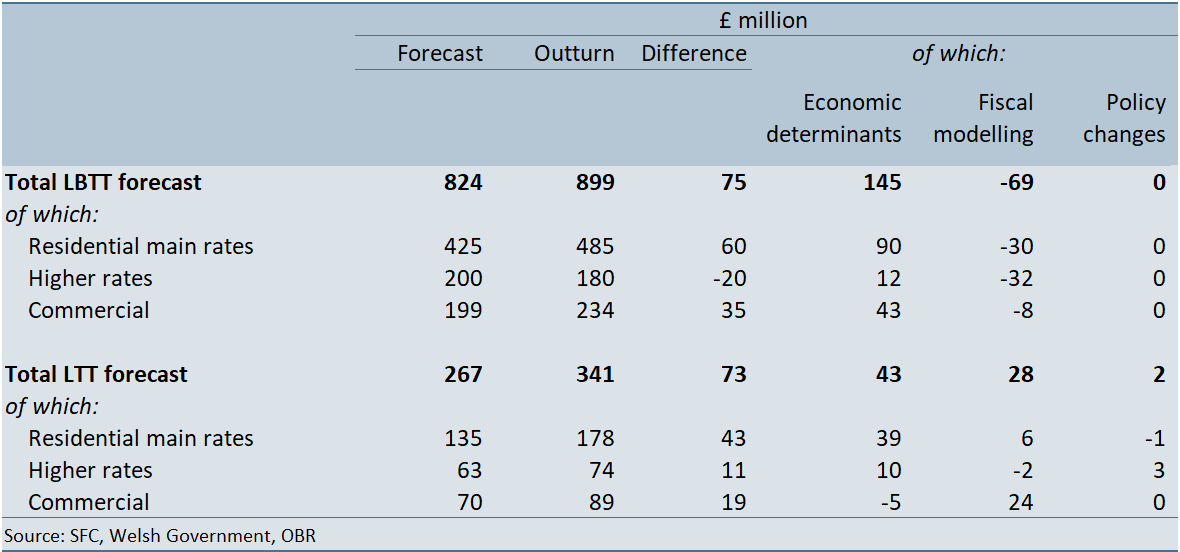
Table A compares the March 2024 forecast for 2024-25 Scottish and Welsh property transactions taxes to the latest outturn data. In both forecasts, the primary cause of the difference is the under forecasting of prices and transactions in the residential sector.
Informed by weak outturn and higher mortgage rates, our March 2024 forecast predicted a decline in house prices and for transactions to be relatively flat in 2024, before a recovery in the housing market later in the forecast. Instead, the residential property market recovered faster than expected and grew in 2024-25, with particularly strong growth for transactions. This led to us significantly underestimating both our land transaction tax (LTT) and land and buildings transaction tax (LBTT) forecasts.
Scottish LBTT
2024-25 outturn for LBTT was £75 million (9 per cent) higher than forecast. This is more than explained by the aforementioned overestimate of transactions and prices. Fiscal modelling differences offset part of this, particularly on the ADS component where outturn was lower than expected due to higher repayments. Scottish commercial property receipts also grew significantly faster than our economic modelling had predicted, due largely to higher transactions.
Welsh LTT
Receipts for Welsh LTT in 2024-25 were £73 million (27 per cent) higher than forecast in March 2024. On the residential side this is mostly explained by the economic modelling difference mentioned above.
However, in Wales more than a third of this difference also comes from fiscal modelling, particularly in the commercial sector. This is because in March 2024 we assumed that weak outturn in 2023-24 at that point would persist, lowering the forecast by 9 per cent. However, there was a significant upturn in March 2024 and some unusually large transactions in 2024-25
which led to us underestimating commercial receipts.
There is also a small difference between the forecast and outturn due to the increase to the higher rate in December 2024. This policy was not known in March 2024 and therefore was not included in the forecast.
Table B: Devolved property taxes in 2024-25: March 2024 forecast versus outturn
This box was originally published in March 2026 Devolved tax and spending forecasts