Office for Budget Responsibility

"It is the duty of the Office to examine and report on the sustainability of the public finances"

MENUMENU
  • Publications
      • Medium-term forecasts
      • Fiscal risks and long-term projections
      • Forecast evaluation
      • Welfare spending trends
      • Monthly commentary
      • Devolution
      • Other releases
      • Analytical and discussion papers
      • Corporate and governance
  • In-depth
    • Tax by tax, spend by spend
    • The economy forecast
    • Policy costings
    • Economic impact of policy measures
    • Brexit analysis
    • Brief guides and explainers
    • Forecast process
    • Analytical and discussion papers
    • OBR macroeconomic model
    • Box sets
  • Data
  • News
  • Articles
  • About
    • What we do
    • Who we are
    • Legislation and related material
    • Governance and reporting
    • International engagement
    • External engagement
    • External reviews
    • Working with Government
    • Vacancies
  • FAQs
  • Contact
  • Recent publications
    •    Latest EFO
    •    EFO charts and tables
    •    Public finances databank – August 2026
    •    Latest devolved forecast
8 March 2017

Economic and fiscal outlook – March 2017

Our latest Economic and fiscal outlook was published on 8 March 2017. It sets out forecasts for the economy and the public finances, and an assessment of whether the Government is likely to achieve its fiscal mandate and supplementary target.

Economic and fiscal outlook overview – March 2017

pdf
Economic and fiscal outlook – March 2017
8 March 2017 – 2.04 MB

youtube logo  Watch the presentation

At a glance

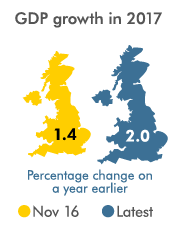
Graphics showing GDP growth
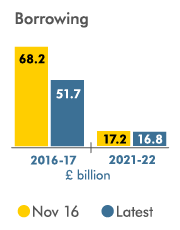
Bar charts showing borrowing forecasts
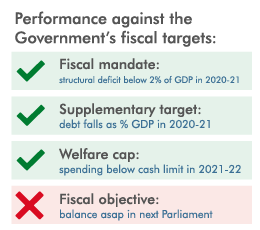
Performance against the fiscal targets checklist

Supporting documents

  • pdf
    March 2017 Economic and fiscal outlook – Executive Summary
    8 March 2017 – 183.85 KB
  • xlsx
    March 2017 Economic and fiscal outlook – charts and tables: fiscal
    8 March 2017 – 1.39 MB

    Chapter 4, 5 and Annexes

  • xlsx
    March 2017 Economic and fiscal outlook – charts and tables: economy
    8 March 2017 – 1.75 MB

    Chapter 1, 2 and 3

  • xlsx
    March 2017 Economic and fiscal outlook – supplementary fiscal tables: receipts and other
    8 March 2017 – 360.52 KB
  • xlsx
    March 2017 Economic and fiscal outlook – supplementary fiscal tables: expenditure
    8 March 2017 – 329.44 KB
  • xlsx
    March 2017 Economic and fiscal outlook – supplementary economy tables
    8 March 2017 – 377.25 KB
  • pdf
    March 2017 Economic and fiscal outlook – press notice
    8 March 2017 – 87.49 KB
  • pdf
    March 2017 Devolved taxes forecast
    8 March 2017 – 595.83 KB
  • pdf
    Log of substantive contact between the OBR and Treasury Ministers, Special Advisers and their private office staff between 23 November 2016 and 7 March 2017
    8 March 2017 – 50.38 KB
  • xlsx
    March 2017 Economic and fiscal outlook – data sources
    28 March 2017 – 255.71 KB

Supplementary documents

Information or data which has been released alongside the Economic and fiscal outlook or as a result of external requests, since the original publication of the main document.

  • pdf
    Business rates appeals - March 2017 Economic and fiscal outlook
    2 November 2017 – 44.17 KB

Presentations

  • pdf
    March 2017 Economic and fiscal outlook – speaking notes
    8 March 2017 – 189.91 KB
  • pdf
    March 2017 Economic and fiscal outlook – presentation slides
    8 March 2017 – 396.95 KB

Previous forecasts

Publications

  • Economic and fiscal outlook
  • Fiscal risks and long-term projections
  • Forecast evaluation report
  • Welfare trends report
  • Monthly public finance release
  • Brief guides and explainers
  • Box sets
  • All other publications

Previous forecasts

23 November 2016

Economic and fiscal outlook – November 2016

Our latest Economic and fiscal outlook was published on 23 November 2016. It sets out forecasts for the economy and the public finances, and an assessment of whether the Government is likely to achieve its fiscal mandate and supplementary target.

Economic and fiscal outlook overview – November 2016

pdf
Economic and fiscal outlook - November 2016
23 November 2016 – 2.37 MB

youtube logo  Watch the presentation

Previous forecasts

Previous forecasts

1 August 2016

Emissions trading scheme (UK ETS)

The UK Emissions Trading Scheme (ETS) is a cap-and-trade scheme, where businesses bid for carbon allowances, with the number of allowances available (the cap) and demand setting the carbon clearing price at auction. Receipts collected by the government equal the auction price multiplied by the number of allowances sold. The UK ETS came into effect on 1 January 2021, when the transition period for the UK leaving the EU ended, replacing the UK’s participation in the EU ETS (from its introduction in 2005). In 2024-25, we estimate that UK ETS will raise £2.6 billion. This represents 0.2 per cent of all receipts and is equivalent to about £90 per household and 0.1 per cent of national income.

Receipts and expenditure

Receipts and expenditure

1 August 2016

Council tax

Council tax is levied on residential property on an annual basis, based on the value of that property.

In 2025-26 we estimate that council tax will raise £50.9 billion (net of any discounts and reduction schemes). That represents 4.1 per cent of total receipts and is equivalent to £1,770 per household and 1.7 per cent of National Income.

To calculate council tax, properties are assigned to one of eight bands, A to H, dependent on their assessed value on 1 April 1991 (2003 for Wales). Rates paid for each band are a fixed proportion of the band D rate, which is determined by each local authority. Discounts are available for single person households, and some other households, while others are exempt. In addition, council tax reduction schemes are available to people on low incomes: in England these schemes are uniform for pensioners, but vary between local authorities for other households.

From April 2028, the new high-value council tax surcharge will take effect, levied on homeowners of properties worth above £2 million based on 2026 valuations. Local authorities will collect the surcharge on behalf of central government.

Council tax funds around a quarter of total local authority current spending, and is the largest element of ‘local authority self-financed expenditure’ (i.e. that which is not financed by various grants from central government). In our forecast we effectively assume that all council tax revenues are spent, so council tax is broadly neutral for borrowing as it is offset in our spending forecast. (There is a small difference between the two due to local authority spending financed by council tax receipts being recorded on a cash basis and receipts being recorded on an accrued basis in the National Accounts).

Receipts and expenditure

Receipts and expenditure

1 August 2016

Alcohol duties

Alcohol duties are levied on purchases of beer, cider or perry, wine or ‘made-wine’, and spirits. Made-wine is any alcoholic drink made by fermentation that is not beer, cider, perry, spirits or wine – mead, for example.

In 2025-26 we estimate that alcohol duties will raise £11.9 billion. This represents 1 per cent of all receipts and is equivalent to around £415 per household and 0.4 per cent of national income.

From August 2023, the taxation of alcohol shifted to a system in which duty is paid by reference to the product’s final alcohol by volume (ABV), harmonizing the tax rates for different types of beverages and reducing the number of rates. The new system has also introduced a new draught relief which allows for a reduced duty rate for qualifying draught products. The rates for each type of product are outlined below:

    • The rate on all alcoholic products (products that are less than 3.5 per cent ABV) is £9.61 per litre of alcohol in the product. The reduced rate is £8.28 per litre of alcohol in the product.
    • The rate on beer (with a strength between 3.5 and 8.5 per cent ABV) is £21.78 per litre of alcohol in the product. The reduced rate is £18.76 per litre of alcohol in the product.
    • The rate on still cider (with a strength between 3.5 and 8.5 per cent ABV) is £10.02 per litre of alcohol in the product. The reduced rate is £8.63 per litre of alcohol in the product.
    • The rate on sparkling cider (with a strength between 3.5 and 5.5 per cent ABV) is £10.02 per litre of alcohol in the product. The reduced rate is £8.63 per litre of alcohol in the product.
    • The rate on sparkling cider (with a strength between 5.5 and 8.5 per cent ABV) is £25.67 per litre of alcohol in the product. The reduced rate is £18.76 per litre of alcohol in the product.
    • The rate on spirits, wines and other fermented products (with a strength between 3.5 and 8.5 per cent ABV) is £25.67 per litre of alcohol in the product. The reduced rate is £18.76 per litre of alcohol in the product.
    • The rate on all alcoholic products (with a strength between 8.5 and 22 per cent ABV) is £29.54 per litre of alcohol in product.
    • The rate on all alcoholic products (with a strength exceeding 22 per cent ABV) is £32.79 per litre of alcohol in the product.

VAT is applied after alcohol duty, so, for example, the price of a one litre bottle of spirits (with a strength of 40 per cent) currently reflects the pre-tax price plus £13.12 of duty plus 20 per cent VAT on both the pre-tax price and the duty.

Receipts and expenditure

Receipts and expenditure

1 August 2016

Tobacco duties

Tobacco duties are levied on purchases of cigarettes, hand-rolled tobacco, cigars and other forms of tobacco. In 2025-26 we estimate that tobacco duties will raise £8 billion. This represents 0.6 per cent of all receipts and is equivalent to 0.3 per cent of national income, and £280 per household. Duty on cigarettes accounts for the majority of all tobacco duty receipts.

There are different rates for each type of product:

    • the rate on cigarettes is 16.5 per cent of the retail price plus £7.07 on a packet of 20;
    • the rate on cigars is £4.41 for a 10g cigar;
    • the rate on hand-rolling tobacco is £15.11 for a 30g packet;
    • the rate on other smoking and chewing tobacco is £5.82 for a 30g packet; and
    • the rate on tobacco for heating is £2.18 for a 6g pack.

VAT is applied after tobacco duty, so, for example, the price of a packet of 20 cigarettes currently reflects the pre-tax price plus 16.5 per cent ad valorem plus £7.07 of duty tax plus 20 per cent VAT on both the pre-tax price and the duty.

Receipts and expenditure

Receipts and expenditure

1 August 2016

Property transaction taxes

Property transaction taxes in the UK are paid by the purchaser when a property is bought. There are currently three such taxes in operation in the UK:

    • Stamp duty land tax (SDLT) in operation in England and Northern Ireland;
    • Land and building transaction tax (LBTT) in operation in Scotland; and
    • Land transaction tax (LTT), in operation in Wales.

We produce forecasts for the devolved property transaction taxes, as well as SDLT. Land and building transaction tax replaced SDLT in Scotland with effect from April 2015, while land transaction tax came into effect in Wales in April 2018. More detail is available on our Scotland, Wales and Northern Ireland page.

The tax paid largely depends on three factors:

    • The nature of the property – tax rates differ depending on whether the property is used for residential or commercial purposes (i.e. whether it is used exclusively as a dwelling or not). For a given price, the marginal tax rate faced is generally higher for residential properties.
    • The price of the transaction – tax rates are graduated so that more expensive properties face progressively higher tax rates. All three taxes follow a ‘slice’ design similar to income tax, whereby rates only apply to the part of a property’s selling price that falls within designated value bands.
    • The characteristics of the purchaser – if a purchaser already owns a dwelling, they face at least a 5 percentage point surcharge on standard tax rates when buying additional residential properties – such as those intended to be rented out or used as second homes. In April 2021 an extra 2 per cent surcharge when paying SDLT was introduced for non-UK residents.

In addition, there are many reliefs available to purchasers that reduce their tax liability. Some of those buying their first dwelling can benefit from a specific ‘first-time buyers’ relief’ if certain criteria are met. There are several other reliefs available, such as for purchases by charities or registered social landlords. Finally, if a commercial property is leased rather than purchased outright, there is a different tax treatment based on the net present value of the lease.

SDLT, LBTT and LTT are relatively similar in design and the ONS combines them when recording them in the public finances statistics. We also combined them in our November 2025 forecast.

Following the ONS approach, we also include the ‘annual tax on enveloped dwellings’ (ATED) in this measure. While not technically a transaction tax, it is a component of the compliance regime for SDLT. It raises around £100 million a year.

In 2025-26 we estimate that property transaction taxes will raise £16.4 billion. This represents 1.3 per cent of all receipts and is equivalent to around £570 per household and 0.5 per cent of national income.


Receipts and expenditure

Receipts and expenditure

1 August 2016

Inheritance tax

Inheritance tax (IHT) is levied on the value of all the assets in an individual’s estate on death, after deducting any liabilities, exemptions and reliefs. Assets left to a spouse or civil partner of the deceased are usually exempt, as are assets left to a charity. In 2025-26 we forecast that IHT will raise £8.7 billion. This represents 0.7 per cent of all receipts and is equivalent to 0.3 per cent of national income or £300 per household.

The rate of IHT is normally 40 per cent on the value of an estate above a threshold of £325,000. This threshold is frozen up to and including 2030-31. Any unused threshold may be transferred to a surviving spouse or civil partner, increasing their combined threshold to up to £650,000. There is an additional transferrable main residence nil rate band of £175,000 available when a home is left to children or other direct descendants. The rate of IHT is reduced to 36 per cent if 10 per cent or more of the net value of the estate above the threshold is left to charity.

Receipts and expenditure

Receipts and expenditure

4 May 2016

Fuel duties

Fuel duties are levied on purchases of petrol, diesel and a variety of other fuels. They represent a significant source of revenue for government.  In 2025-26, we expect fuel duties to raise £24 billion. That would represent 1.9 per cent of all receipts and is equivalent to £835 per household and 0.8 per cent of national income.

Fuel duty is levied per unit of fuel purchased and is included in the price paid for petrol, diesel and other fuels used in vehicles or for heating. The rate depends on the type of fuel:

    • the headline rate on standard petrol and diesel is 52.95 pence per litre, which has been frozen since 2011-12 and includes a temporary 5 pence cut introduced in 2022-23 and subsequently extended to 2023-24, 2024-25, 2025-26 and some of 2026-27. This also applies to biodiesel and bioethanol;
    • the rate on marked gas oil is 10.18 pence per litre. This mostly represents off-road diesel used for agriculture, rail, non-commercial heating and electricity, and other qualifying purposes;
    • the rate on liquefied petroleum gas is 28.88 pence per kilogram;
    • the rate on natural gas used as fuel in vehicles (e.g. biogas) is 22.57 pence per kilogram; and


    • the rate on ‘fuel oil’ burned in a furnace or used for heating is 9.78 pence per litre.

VAT is applied after fuel duty, so, for example, the pump price of a litre of petrol currently reflects the pre-tax price plus 52.95p for fuel duty plus 20 per cent VAT on the pre-tax price and a further 10.59p for VAT at 20 per cent on fuel duty.

Receipts and expenditure

Receipts and expenditure

16 March 2016

Economic and fiscal outlook – March 2016

Our latest Economic and fiscal outlook was published on 16 March 2016. It sets out forecasts for the economy and the public finances, and an assessment of whether the Government is likely to achieve its fiscal mandate and supplementary target.

pdf
Economic and fiscal outlook - March 2016
16 March 2016 – 4.94 MB

youtube logo  Watch the presentation

Previous forecasts

Previous forecasts

Publications

  • Economic and fiscal outlook
  • Fiscal risks and long-term projections
  • Forecast evaluation report
  • Welfare trends report
  • Monthly public finance release
  • Devolution
  • All other publications

Forecasts in-depth

  • Tax by tax, spend by spend
  • The economy forecast
  • Policy costings
  • Economic impact of policy measures
  • Brief guides and explainers
  • Brexit analysis
  • Forecast process
  • Analytical and discussion papers
  • OBR macroeconomic model
  • Box sets

About the OBR

  • What we do
  • Who we are
  • Legislation and related material
  • International engagement
  • External engagement
  • External reviews
  • Working with Government
  • Vacancies

Transparency

  • Letters
  • Requests for information
  • Evidence to parliaments
  • Governance and reporting
  • Press conferences and presentations
Follow us on Twitter, this link opens in a new window Subscribe to our YouTube Channel, this link opens in a new window Connect with us on LinkedIn, this link opens in a new window
  • Accessibility statement
  • Privacy policy
  • Cookie policy
  • Copyright
  • Contact us
Manage cookie settings

© 2026 Office for Budget Responsibility

14T, 102 Petty France, London SW1H 9AJ
[email protected]

This website uses cookies to improve your experience. We'll assume you're ok with this, but you can opt-out if you wish. Cookie settingsRejectAccept
Cookie Policy

Privacy Overview

This website uses cookies to improve your experience while you navigate through the website. Out of these, the cookies that are categorized as necessary are stored on your browser as they are essential for the working of basic functionalities of the website. We also use third-party cookies that help us analyze and understand how you use this website. These cookies will be stored in your browser only with your consent. You also have the option to opt-out of these cookies. But opting out of some of these cookies may affect your browsing experience.
Necessary
Always Enabled
Necessary cookies are absolutely essential for the website to function properly. These cookies ensure basic functionalities and security features of the website, anonymously.
CookieDurationDescription
JSESSIONIDsessionUsed by sites written in JSP. General purpose platform session cookies that are used to maintain users' state across page requests.
viewed_cookie_policy1 yearThe cookie is set by the GDPR Cookie Consent plugin and is used to store whether or not user has consented to the use of cookies. It does not store any personal data.
__cfduid1 monthThe cookie is used by cdn services like CloudFare to identify individual clients behind a shared IP address and apply security settings on a per-client basis. It does not correspond to any user ID in the web application and does not store any personally identifiable information.
Others
Other uncategorized cookies are those that are being analyzed and have not been classified into a category as yet.
CookieDurationDescription
CONSENT16 years 8 monthsNo description
cookielawinfo-checkbox-advertising-cookies1 yearNo description
cookielawinfo-checkbox-first-party-cookies1 yearNo description
cookielawinfo-checkbox-functional-cookies1 yearNo description
cookielawinfo-checkbox-performance-cookies1 yearNo description
cookielawinfo-checkbox-persistent-cookies1 yearNo description
cookielawinfo-checkbox-session-cookies1 yearNo description
cookielawinfo-checkbox-strictly-necessary-cookies1 yearNo description
cookielawinfo-checkbox-third-party-cookies1 yearNo description
tableau_localesessionNo description
tableau_public_negotiated_localesessionNo description
_gat_gtag_UA_41824266_11 minuteNo description
Analytics
Analytical cookies are used to understand how visitors interact with the website. These cookies help provide information on metrics the number of visitors, bounce rate, traffic source, etc.
CookieDurationDescription
_ga2 yearsThis cookie is installed by Google Analytics. The cookie is used to calculate visitor, session, campaign data and keep track of site usage for the site's analytics report. The cookies store information anonymously and assign a randomly generated number to identify unique visitors.
_gid1 dayThis cookie is installed by Google Analytics. The cookie is used to store information of how visitors use a website and helps in creating an analytics report of how the website is doing. The data collected including the number visitors, the source where they have come from, and the pages visted in an anonymous form.
Performance
Performance cookies are used to understand and analyze the key performance indexes of the website which helps in delivering a better user experience for the visitors.
CookieDurationDescription
YSCsessionThis cookies is set by Youtube and is used to track the views of embedded videos.
__utma2 yearsThis cookie is set by Google Analytics and is used to distinguish users and sessions. The cookie is created when the JavaScript library executes and there are no existing __utma cookies. The cookie is updated every time data is sent to Google Analytics.
__utmb30 minutesThe cookie is set by Google Analytics. The cookie is used to determine new sessions/visits. The cookie is created when the JavaScript library executes and there are no existing __utma cookies. The cookie is updated every time data is sent to Google Analytics.
__utmcsessionThe cookie is set by Google Analytics and is deleted when the user closes the browser. The cookie is not used by ga.js. The cookie is used to enable interoperability with urchin.js which is an older version of Google analytics and used in conjunction with the __utmb cookie to determine new sessions/visits.
__utmt10 minutesThe cookie is set by Google Analytics and is used to throttle request rate.
__utmz6 monthsThis cookie is set by Google analytics and is used to store the traffic source or campaign through which the visitor reached your site.
SAVE & ACCEPT
Powered by CookieYes Logo